Skip to content
GGoLearnToTravel home with a skill

commercial spoke

Agadir reconstruction and history learning

Learn to read Agadir Oufella, the 1960 earthquake and the rebuilt city through archaeology, archives and honest restoration boundaries.

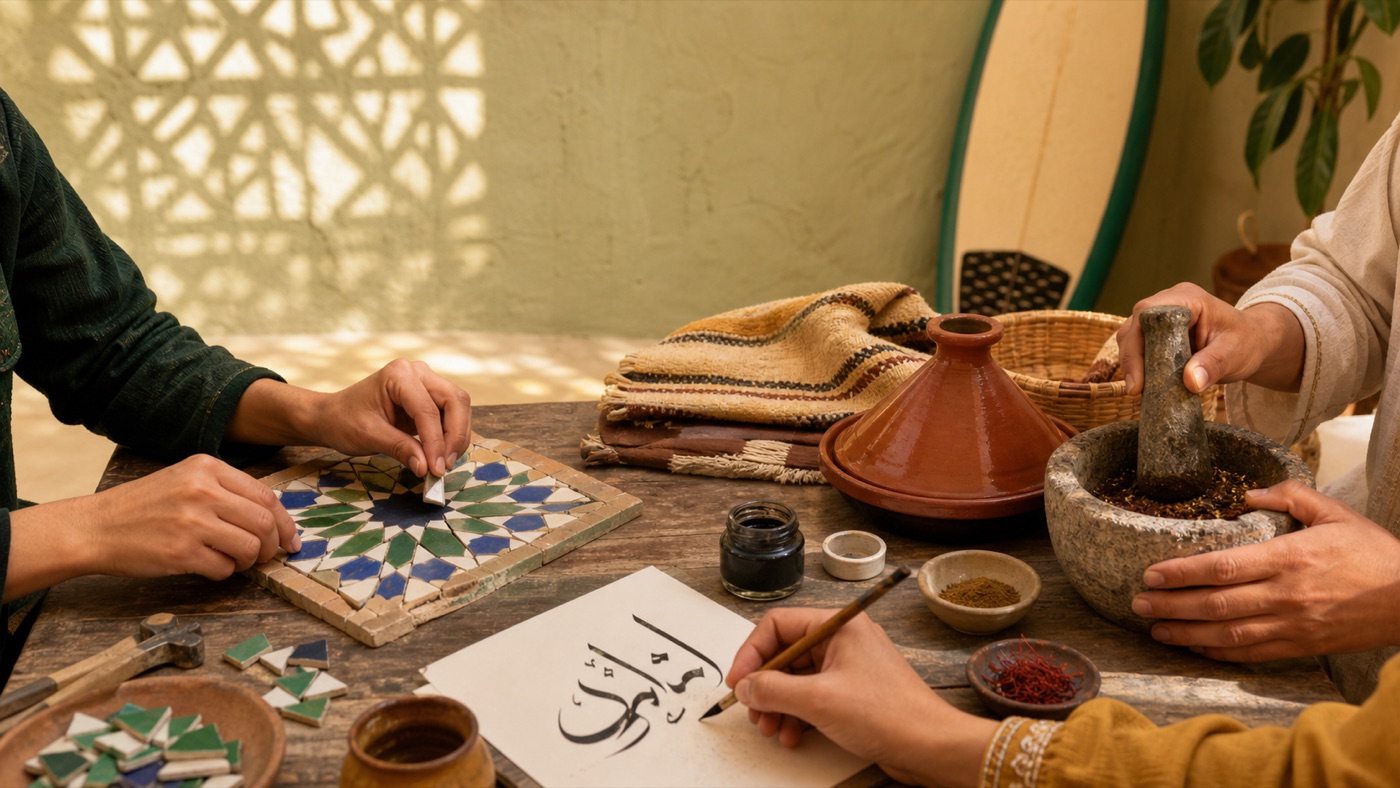
Editorial illustration of hands learning zellige, calligraphy and Moroccan cooking techniques
Editorial context · AI-generated editorial context image by GoLearnTo

Salam from Agadir

Why the place matters

Agadir sits between city streets, Atlantic waves and the wider Souss. Always check which one is your real classroom.

A Moroccan minute

Read the place through evidence, not a sprint through dates. One sharp question can open the whole route.

Useful first. Memorable second. Ideally both.

Place–skill evidence

Why this skill belongs in Agadir

Learn how Agadir Oufella, archive material and preventive archaeology interpret the pre-1960 city without presenting reconstruction as untouched antiquity.

Agadir Oufella1960 earthquakepreventive archaeology
Open the complete place hub
Provider evidence
HOLD
Sources checked
3
Last reviewed
14 Aug 2026

Other qualified skills in this place

Same placeArabic and DarijaRequire a visitor-sized in-person course, named teacher, level and correction rather than borrowing outcomes from exam-preparation or long-form products.Explore on GoLearnTo Same placeTamazightTreat Tamazight as a specific language-learning target with variety, teacher, level, contact hours and respectful local-use boundaries.Explore on GoLearnTo Same placeMoroccan cookingSeparate active cooking from farm visits, transfers and shared meals while verifying the chef, exact site, allergens and repeat-home learning.Explore on GoLearnTo Same placePotteryCompare city pottery by learner shaping, correction, delayed drying and firing, collection and delivery—never generalising one provider’s timeline.Explore on GoLearnTo Same placeZellige and mosaicAsk which geometric, cutting and assembly stages the learner practises and which prepared components or finishing remain practitioner work.Explore on GoLearnTo Same placeJewellery makingCompare same-day jewellery outcomes by named artisan, technique, tool controls, cultural provenance, personal decisions and wearable finish.Explore on GoLearnTo Same placeWeavingRequire a named practitioner, loom or fibre task, corrected repetition and honest short-session output rather than craft display alone.Explore on GoLearnTo Same placePainting and ceramic decorationDistinguish canvas or surface study from ceramic painting, with the medium, artist, exercise, feedback, drying and retained work stated.Explore on GoLearnTo

Your learning plan

What a good reconstruction and city history experience in Agadir should feel like

Learn how to read a place, connect evidence and test an interpretation instead of collecting a list of dates at walking speed.

The honest outcome

A sharper way to read the next building, landscape, collection or historical claim.

01

What you should practise

  • Observe a site or object closely
  • Connect it to a named source or period
  • Compare interpretations and ask what changed

02

A sensible session

  1. Question-led route briefing
  2. Field observation and discussion
  3. Short synthesis or comparison

03

Compare before enquiring

  • Guide expertise and sources
  • Route thesis
  • Access, photography and sensitive-site boundaries

A little Moroccan honesty

A guided visit can be deeply educational without being hands-on. The honest label is interpretation, not a practical craft course.

Local signals

Agadir Oufella · 1960 earthquake · preventive archaeology

The place–skill fit is evidenced; provider verification is still open.

Agadir’s strongest history lesson is how a city remembers after rupture. Agadir Oufella’s restoration used preventive archaeology, wall stratigraphy, archives and reconstructed street geometry to interpret the pre-1960 city. La Medina d’Agadir at Bensergao is a later purpose-built cultural project, not an untouched survivor.

This skill belongs in Agadir. We are still checking the right local provider.

Ask what kind of evidence you are seeing

A strong guide identifies original material, excavation evidence, restored walls, reconstructed forms, archive-based interpretation and new work. The Amazigh Heritage Museum adds object-based regional context but is not itself a craft workshop.

What to verify

  • Named guide and current legal operator
  • Exact Oufella, museum, Talborjt or Bensergao route
  • Primary sources, dates and interpretation method
  • Original, restored, reconstructed and new-work labels
  • Earthquake remembrance handled with care
  • Walking surfaces, heat, shade, transport and access
  • Group size, language, safeguarding and photography
  • Explicit alcohol-free route and inclusions
  • Current entry, date, price and cancellation

Return to Agadir, compare the practical urban walking route, or connect the city story to Tamazight.

Continue on GoLearnTo

Related places, skills and field guides

Keep exploring

More places and learning ideas