Skip to content
GGoLearnToTravel home with a skill

commercial spoke

Archaeology and city-history learning in Rabat

Learn Rabat history through Chellah, museum chronology and UNESCO urban layers using sources, site boundaries and active interpretation prompts.

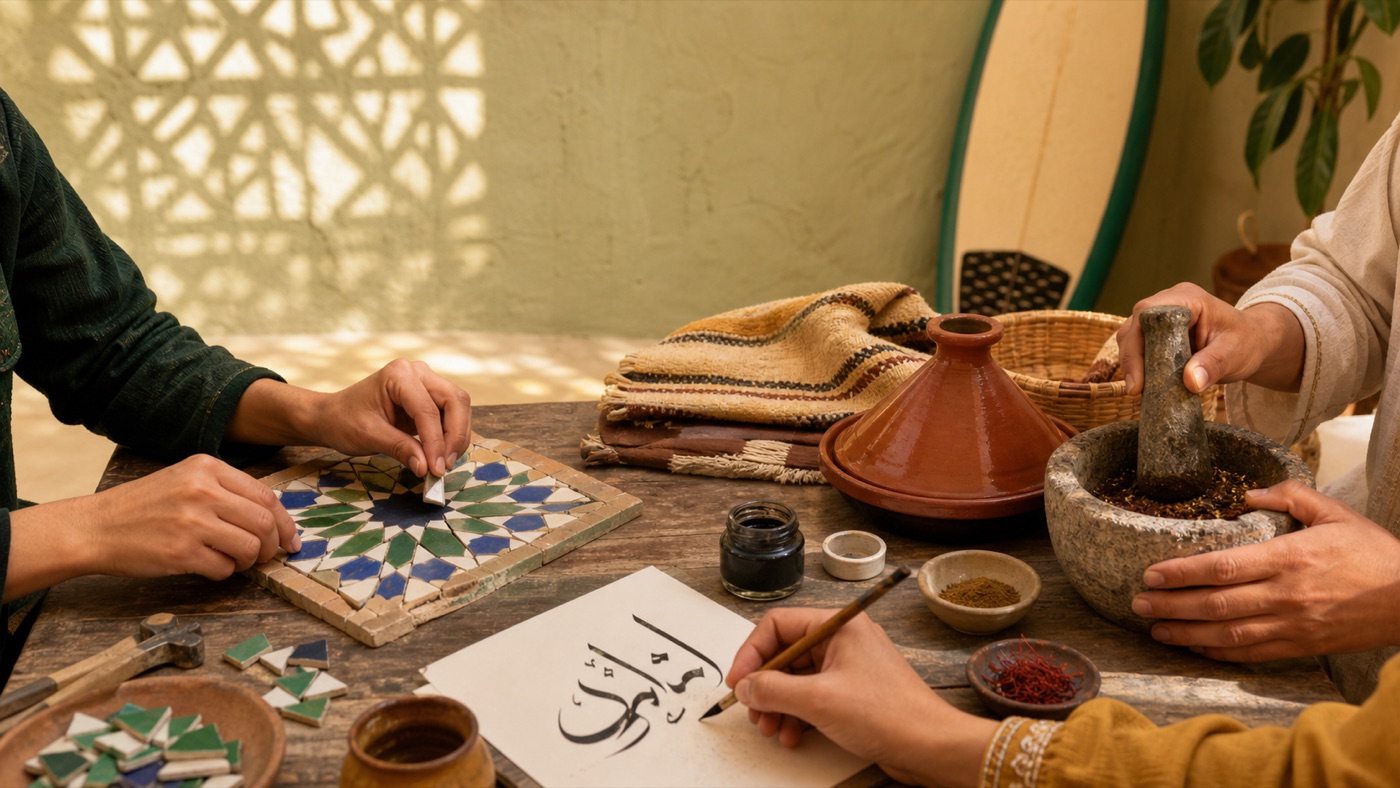
Editorial illustration of hands learning zellige, calligraphy and Moroccan cooking techniques
Editorial context · AI-generated editorial context image by GoLearnTo

Salam from Rabat

Why the place matters

Rabat is calm by Moroccan-city standards. That leaves more room to listen, practise and ask a second question.

A Moroccan minute

Read the place through evidence, not a sprint through dates. One sharp question can open the whole route.

Useful first. Memorable second. Ideally both.

Place–skill evidence

Why this skill belongs in Rabat

Use Chellah, museums and the historic-modern city as source layers while separating audio or guided interpretation from practical instruction.

ChellahMuseum of History and CivilisationsUNESCO
Open the complete place hub
Provider evidence
1 profile
Sources checked
3
Last reviewed
14 Aug 2026

Your learning plan

What a good archaeology and city history experience in Rabat should feel like

Learn how to read a place, connect evidence and test an interpretation instead of collecting a list of dates at walking speed.

The honest outcome

A sharper way to read the next building, landscape, collection or historical claim.

01

What you should practise

  • Observe a site or object closely
  • Connect it to a named source or period
  • Compare interpretations and ask what changed

02

A sensible session

  1. Question-led route briefing
  2. Field observation and discussion
  3. Short synthesis or comparison

03

Compare before enquiring

  • Guide expertise and sources
  • Route thesis
  • Access, photography and sensitive-site boundaries

A little Moroccan honesty

A guided visit can be deeply educational without being hands-on. The honest label is interpretation, not a practical craft course.

Local signals

Chellah · Museum of History and Civilisations · UNESCO

1 researched provider profile is connected to this route.

Independently selected

Experiences to enquire about

How selection works
Editorial illustration of hands learning zellige, calligraphy and Moroccan cooking techniques
Editorial contextLearn in Rabat, Morocco
Independently selectedSelf-guided or guided format dependent; current duration is not verified

Archaeology interpretation lead at Chellah Rabat

Profile for Chellah

A seven-hectare Rabat archaeological site publishing multilingual audio interpretation; current specialist guide, route and active learning need confirmation.

  • Archaeology interpretation
  • City history
See what you’ll learn

Chellah provides a seven-hectare archaeological setting and multilingual audio interpretation. The Museum of History and Civilisations adds a chronological collection from prehistory through the Islamic period. UNESCO adds the modern-capital and historic-city frame.

Ask what kind of evidence you are using

A strong guide distinguishes material remains, museum objects, inscriptions, later restoration, archival evidence and interpretation. Audio access is useful; it is not the same as a question-led specialist session.

What to verify

  • Current site, operator and named guide or educator
  • Exact route, chronology and source method
  • Archaeological fabric, restoration and inference labels
  • Learner prompts, questions and review
  • Entry, audio, language and photography permissions
  • Steps, surfaces, heat, shade and mobility alternatives
  • Group size, safeguarding and respectful conduct
  • Explicit alcohol-free route and inclusions
  • Current opening, date, duration, price and cancellation

Return to Rabat, compare the planned-city layer through architecture, or connect objects to adornment and jewellery.

Evidence

Selected references

Official and institutional references used for place, heritage or practical context. Commercial operators and marketplaces are kept in our private research ledger rather than promoted here. Reviewed 14 August 2026.

  1. UNESCO World Heritage Centre

Continue on GoLearnTo

Related places, skills and field guides

Keep exploring

More places and learning ideas