Gnawa music can catch you before you know what you are hearing: the low pulse of a guembri, the metallic drive of qraqeb and a voice calling a group into response. In Essaouira, it is easy to meet Gnawa on a stage. Learning with respect means going one step further—asking about the people, memory and community behind the sound.
The quick decision map
| If you want to… |
Look for… |
Watch out for… |
| Try the guembri |
A named musician, instrument introduction and a short repeatable phrase |
“Master the guembri” in one lesson |
| Learn qraqeb rhythm |
Slow pattern-building, posture and ensemble timing |
Loud imitation with no correction |
| Explore movement |
A teacher who explains context and what is appropriate to teach |
Sacred or ceremonial practice sold as tourist choreography |
| Understand the tradition |
History, vocabulary and listening alongside playing |
Gnawa reduced to festival entertainment |
| Attend a performance |
A clearly described concert or lila-related interpretation |
A performance advertised as a hands-on class |
Gnawa in plain English
Gnawa is a living Moroccan cultural tradition with music, oral knowledge, ritual, fellowship and histories linked to sub-Saharan Africa. UNESCO inscribed it on the Representative List of the Intangible Cultural Heritage of Humanity in 2019.
Music is the most visible doorway, but it is not the whole house. The tradition includes particular roles, repertories, spiritual meanings and forms of transmission. A short visitor session can introduce musical ideas; it should not promise initiation into knowledge that belongs to community practice.
Three sounds to recognise
The guembri—also called hajhouj or sintir in different contexts—is a three-stringed bass lute whose repeating patterns anchor the music. The qraqeb are iron castanets that create a strong, interlocking pulse. Voice and response carry text, energy and group participation.
The interesting learning moment is not simply making noise. It is hearing how a guembri phrase, qraqeb pattern and vocal cue sit together. Even a beginner can learn to hold one small part steady and listen for the others. That is already real progress.
What a good first session might include
A thoughtful 60- to 120-minute introduction may include:
- meeting the musician and naming their role;
- seeing how the instruments are made, tuned and held;
- listening to a short phrase before copying it;
- practising one qraqeb or guembri pattern slowly;
- playing a simple call-and-response sequence;
- discussing what the session can and cannot represent;
- ending with questions or a short demonstration.
You do not need to perform impressively. The goal is to leave with a better ear, a little rhythm in your hands and more respect for what remains beyond a beginner lesson.
Why Essaouira is a strong base
Essaouira has a major contemporary Gnawa presence and hosts the Gnaoua and World Music Festival. The festival brings artists, audiences and educational projects together, but a festival ticket is not the same as a lesson.
For practical learning, look for a smaller setting where the musician can hear you, correct you and explain the instrument. A memorable stage performance can inspire the question; a focused session helps answer it.
Music, movement and respectful boundaries
Not every part of Gnawa practice should be repackaged for visitors. Ask whether a movement session is a general rhythmic introduction, stage choreography or teaching connected with a living ceremonial context. The provider should be able to explain the boundary without turning it into mystery marketing.
Avoid claims that a short class provides healing, spiritual initiation or mastery. Also avoid costume-led experiences in which the practitioner becomes a photo prop. The musician’s name, teaching role and pay matter more than decorative language about “ancient secrets”.
Listen before you play
Ask the musician to perform one short pattern while you listen for pulse, repetition and cue. Then clap or vocalise the rhythm before adding an instrument. This small step prevents the first ten minutes from becoming a competition between your hands and a very loud pair of qraqeb.
For guembri, begin with posture, right-hand attack and one repeated figure. The instrument carries both rhythm and bass movement, so speed is not the useful goal. A steady phrase that sits with another part is more musical than six fast notes that have left the group entirely.
For qraqeb, hand comfort matters. The metal instruments are heavy and loud. A teacher should show grip, movement and rest, then build the pattern slowly. Ask about hearing comfort and whether lighter practice instruments are available for children or beginners.
Recording, photographs and names
Permission to attend is not automatic permission to record. Ask before filming, especially when a session moves from general teaching toward repertoire or practice with ceremonial meaning. If the answer is no, put the phone away without negotiating. Your memory is allowed to do some work on holiday.
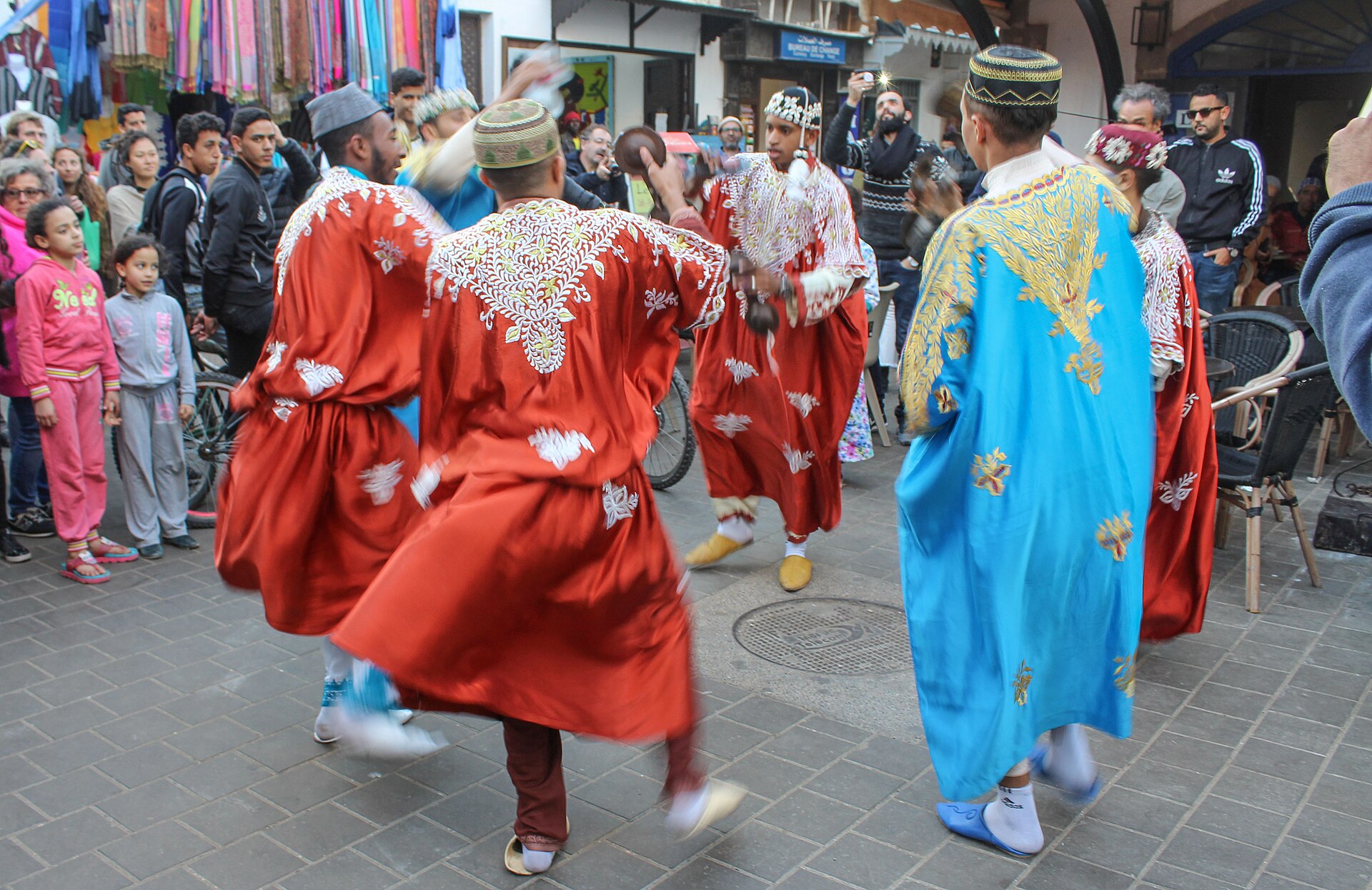
When photographs are welcome, caption the musician by name and role if they consent. Avoid presenting a staged beginner session as documentation of a ceremony. GoLearnTo’s own editorial image on this guide is labelled as cultural context and does not claim to show a listed provider.
Festival time versus ordinary time
Essaouira’s festival period can bring extraordinary access to concerts, talks and visiting artists. It can also bring full accommodation, traffic, changed schedules and teachers who are busy performing. A festival programme should be checked by edition and date; last year’s workshop is not permanent inventory.
Outside festival time, a smaller lesson may offer more correction and conversation. Decide whether your priority is seeing a wide range of artists, studying one instrument or understanding the tradition through discussion. Those are three good trips, but they need different timetables.
If you pair the lesson with another Essaouira activity, leave breathing room. Gnawa learning asks for attentive listening. It deserves better than being squeezed between surf pickup and a rushed dinner as the “cultural bit” of the day.
Before leaving, ask the musician what to listen to next and how they prefer their work to be credited. One thoughtful recommendation can continue the lesson long after the instruments are put away.
Questions worth asking
- Who teaches, and what is their connection to Gnawa practice?
- Is this a lesson, demonstration, concert or cultural talk?
- Which instrument or movement will I practise?
- How large is the group?
- Are instruments provided?
- Can beginners join without musical training?
- Which language is used for instruction?
- May participants photograph or record, and when should cameras stay away?
- Is the musician paid directly or through an organiser?
- Does the session include anything ceremonial, and how is consent handled?
Build an Essaouira learning day
Start with the Essaouira learning guide. Compare Gnawa guembri learning with Gnawa movement sessions, then add another local skill such as cooking, photography or surf coaching.
Return to the Morocco learning hub when you want to compare music-led Essaouira with craft-led Fes or language learning in Tetouan.
Enquire with the useful details
Tell GoLearnTo whether you want guembri, qraqeb, movement, listening or cultural interpretation. Add your dates, music level, group size, preferred language and whether you need an instrument. We can then ask a musician a respectful, useful question on your behalf.
Evidence
Selected references
Official and institutional references used for place, heritage or practical context. Commercial operators and marketplaces are kept in our private research ledger rather than promoted here. Reviewed 14 August 2026.
- UNESCO Intangible Cultural Heritage

 Editorial contextLearn in Essaouira, Morocco