Skip to content
GGoLearnToTravel home with a skill

commercial spoke

Zellige and mosaic workshops in Marrakech

Choose a Marrakech zellige workshop by geometric planning, learner practice, safe tile handling, artisan instruction and finished outcome.

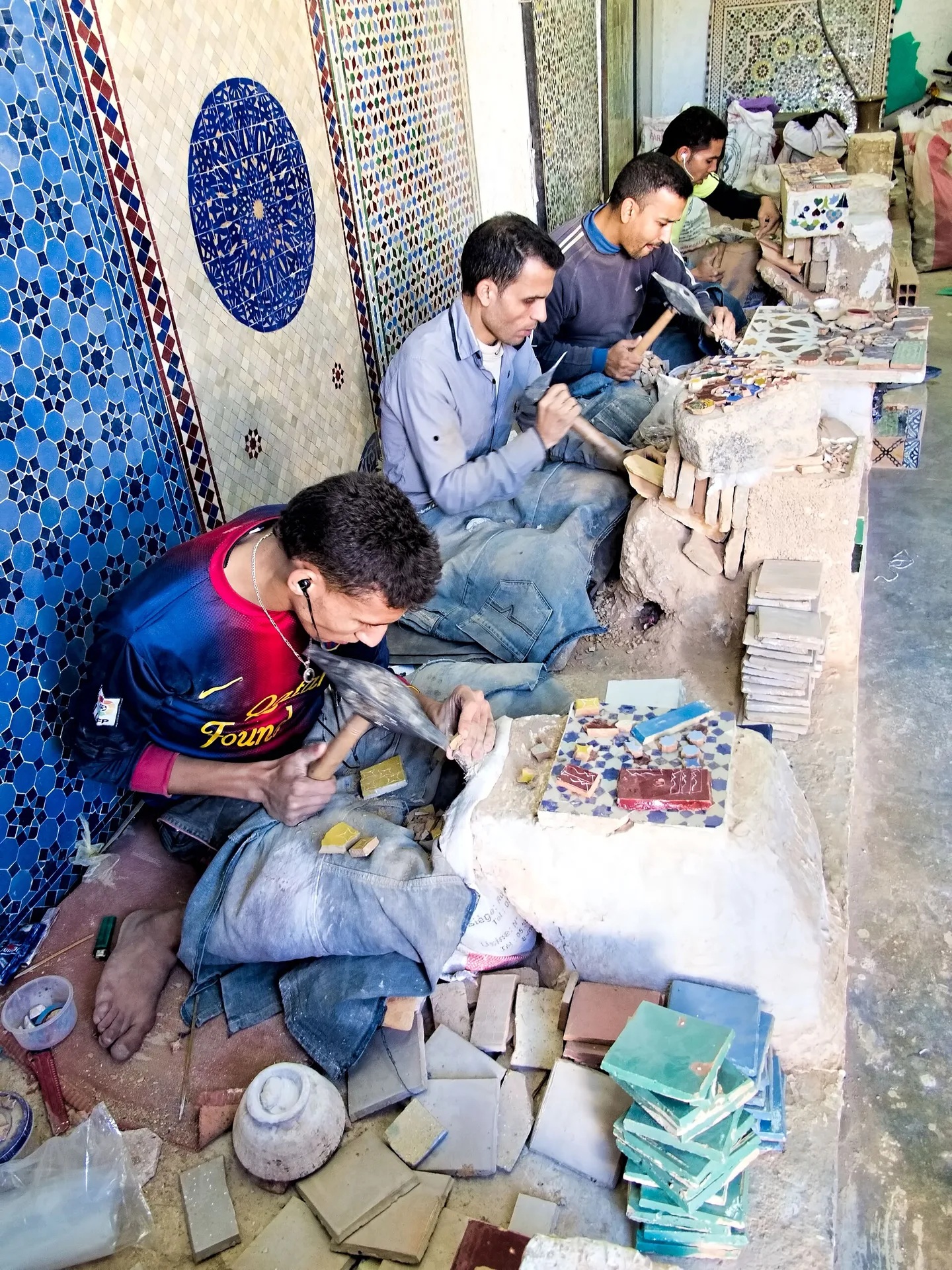
Zellige pieces in a Moroccan workshop, shown as craft context
Editorial context · Dan Lundberg · CC BY-SA 2.0

Salam from Marrakech

Why the place matters

Marrakech offers plenty of sparkle. Your job is to find the lesson hiding behind the packaging.

A Moroccan minute

Touch the material and practise a real stage. A beautiful demonstration is still a demonstration.

Useful first. Memorable second. Ideally both.

See the learning loop

A truthful zellige or clay learning sequence

  1. Step 1Meet the material
  2. Step 2Watch the tool
  3. Step 3Practise one real stage
  4. Step 4Receive correction
  5. Step 5Understand drying or finishing

Place–skill evidence

Why this skill belongs in Marrakech

Understand geometric planning, tile handling and assembly while checking exactly which cutting and finishing stages are safe for learners.

zelligegeometric patterntile assembly
Open the complete place hub
Provider evidence
1 profile
Sources checked
2
Last reviewed
14 Aug 2026

Other qualified skills in this place

Your learning plan

What a good zellige and mosaic experience in Marrakech should feel like

Understand the material, practise a real stage and know exactly what happens to your piece after your hands leave it.

The honest outcome

A study or finished piece where practical, plus a truthful understanding of the stages you did not complete.

01

What you should practise

  • Prepare, shape or arrange the material
  • Correct form, joins or geometry
  • Understand drying, glazing, firing or assembly

02

A sensible session

  1. Material and tool demonstration
  2. Guided making with repeated correction
  3. Finish, label and agree collection or delivery

03

Compare before enquiring

  • Pre-cut pieces versus full process
  • Air-dried versus kiln-fired outcome
  • Tool safety and artisan attribution

A little Moroccan honesty

Watching a master work is interpretation. Using prepared pieces is assembly. Both can be worthwhile when the page names the learner's real role.

Local signals

zellige · geometric pattern · tile assembly

1 researched provider profile is connected to this route.

Independently selected

Experiences to enquire about

How selection works
Zellige pieces in a Moroccan workshop, shown as craft context
Editorial contextLearn in Marrakech, Morocco
Independently selectedAbout three hours in the current public outline

Hands-on zellige workshop in Marrakech

Profile for Ateliers d’Ailleurs

A three-hour workshop whose public outline includes raw-material context, drawing and cutting small zellige pieces, and supervised practice.

  • Zellige
  • Moroccan craft
See what you’ll learn

Zellige is a geometric tile tradition, not a generic synonym for any Moroccan mosaic. A useful Marrakech introduction should explain the pattern logic and give the learner a safe, supervised role in drawing, arranging or assembling pieces.

Which part will you actually learn?

Stage Possible learner role What to confirm
Pattern planning Trace or construct a simple geometry Is the design explained or supplied?
Colour selection Choose a bounded palette Are choices connected to the pattern?
Tile shaping Observe or try controlled cutting Which tools may beginners use?
Assembly Place pieces face-down or in a guide How is alignment corrected?
Finishing Review the assembled object Is setting completed later?

Prepared pieces do not make a workshop invalid. The honest distinction is whether cutting is demonstrated for safety while the learner focuses on geometry and assembly, or whether “make your own zellige” hides a mostly pre-completed object.

What a beginner can retain

In a few hours, you may understand how a motif repeats, why negative space matters and how small errors accumulate across a pattern. You may complete a small object or sample. Mastery of cutting, setting and architectural installation requires far longer.

What to verify

  • Who is the current artisan-teacher?
  • How much advertised time is active practice?
  • Which stages and tools are learner-facing?
  • What eye, hand and tool controls are used?
  • Is translation available without replacing direct practitioner interaction?
  • What can be carried away, and is any later finish required?
  • Is the venue and complete experience alcohol-free?

Return to Marrakech, learn the terminology in the zellige guide, or compare pottery and calligraphy.

Evidence

Selected references

Official and institutional references used for place, heritage or practical context. Commercial operators and marketplaces are kept in our private research ledger rather than promoted here. Reviewed 14 August 2026.

  1. UNESCO World Heritage Centre

Continue on GoLearnTo

Related places, skills and field guides

Keep exploring

More places and learning ideas