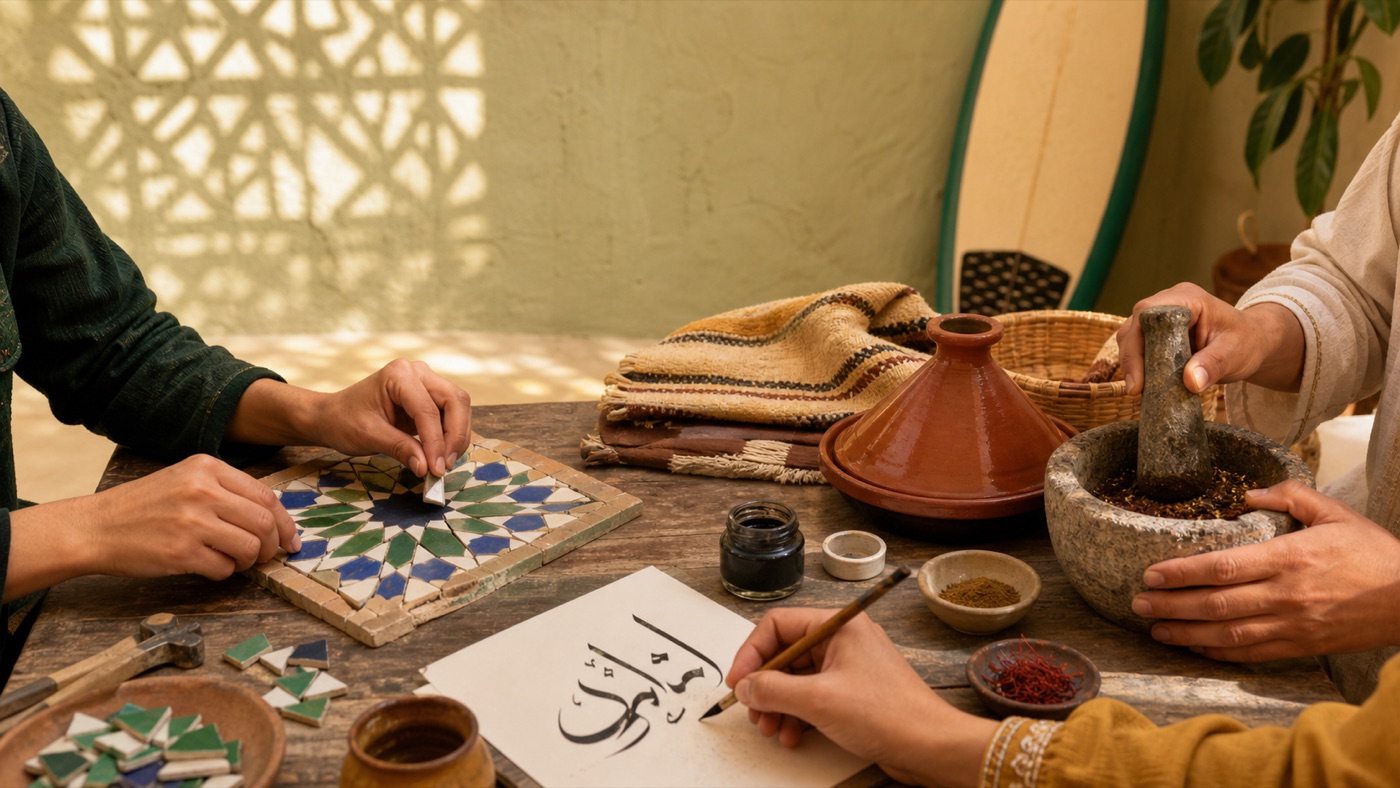
Marrakech craft learning is not one category with interchangeable souvenirs. Zellige, pottery, weaving and calligraphy use different materials, actions, time scales and safety controls. Start with the process you want to practise.
Four qualified craft routes
Use the participation ladder
| Level |
Learner role |
Honest label |
| 1 |
Watches the practitioner |
Demonstration |
| 2 |
Asks questions and compares examples |
Interpretation |
| 3 |
Tries one bounded action |
Sampled participation |
| 4 |
Completes a supervised sequence |
Hands-on workshop |
| 5 |
Repeats, receives correction and adapts |
Skills lesson |
Every level can have value when labelled correctly. The problem begins when a retail visit is sold as a class or a five-minute trial is described as “making your own” object.
Material and maker evidence
Ask who teaches, which stages they personally practise and how workshop revenue reaches the practitioner. “Local artisan” should not be an anonymous marketing character. Translation can help, but the guide should not erase the teacher’s role.
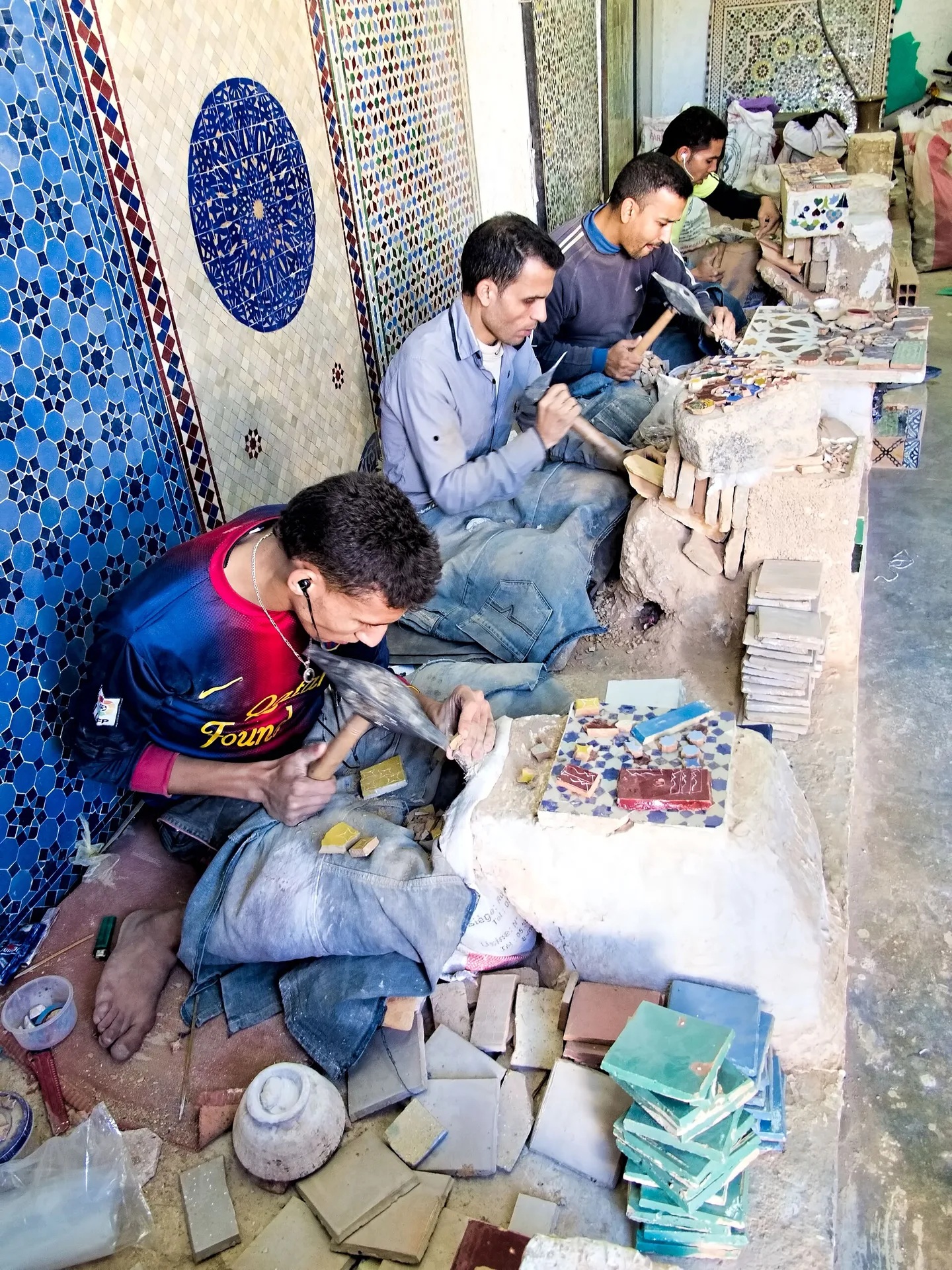
Prepared materials are often necessary. A warped mini loom, pre-cut tiles or prepared clay can protect learning time. The page or host should disclose what is prepared and why.
What to verify
- The current named practitioner and teaching language
- Exact learner stages and active practice time
- Group size and correction method
- Tool, blade, dust, kiln, ventilation and material controls
- Drying, firing, finishing, collection and shipping arrangements
- Artisan attribution, consent and compensation
- Accessibility, safeguarding and explicit alcohol-free scope
- Whether shopping is optional and free from pressure
Return to the Marrakech city hub, then choose the specific material rather than sending a vague “craft workshop” enquiry.
Evidence
Selected references
Official and institutional references used for place, heritage or practical context. Commercial operators and marketplaces are kept in our private research ledger rather than promoted here. Reviewed 14 August 2026.
- UNESCO World Heritage Centre
 Editorial contextLearn in Marrakech, Morocco