Moroccan craft is easy to admire and surprisingly easy to describe badly. A “workshop” might mean cutting tile, shaping clay, tying one weaving row, touring a tannery or listening to a shopkeeper explain a finished object. The right choice starts with one question: what will your hands actually do?
Choose the city by craft
| Base |
Strong craft fit |
Start here |
| Fes |
Zellige, pottery, leather, bookbinding, weaving and metalwork |
Best for seeing long production chains and choosing one stage deeply |
| Tetouan |
Zellige, painting, calligraphy, leather and northern textile traditions |
Strong Andalusian-Moroccan context and smaller cultural spaces |
| Marrakech |
Broad range of short pottery, mosaic, weaving and calligraphy sessions |
Easy comparison, but verify teacher and active time |
| Chefchaouen and Rif |
Wool, rural pottery, painting and embroidery |
Ask whether the practitioner and village location are named |
| Essaouira |
Thuya wood, Gnawa instruments, embroidery and visual art |
Separate practical making from gallery or shop visits |
| Agadir and Souss |
Argan, pottery, jewellery and textile workshops |
Connect the activity to the producer and wider landscape |
The participation ladder
Craft experiences sit on different levels:
- View: see a finished object or production site.
- Interpret: receive a guided explanation and ask questions.
- Try: complete one small stage with supervision.
- Make: follow a sequence, receive correction and finish an object.
- Study: repeat the technique over several sessions.
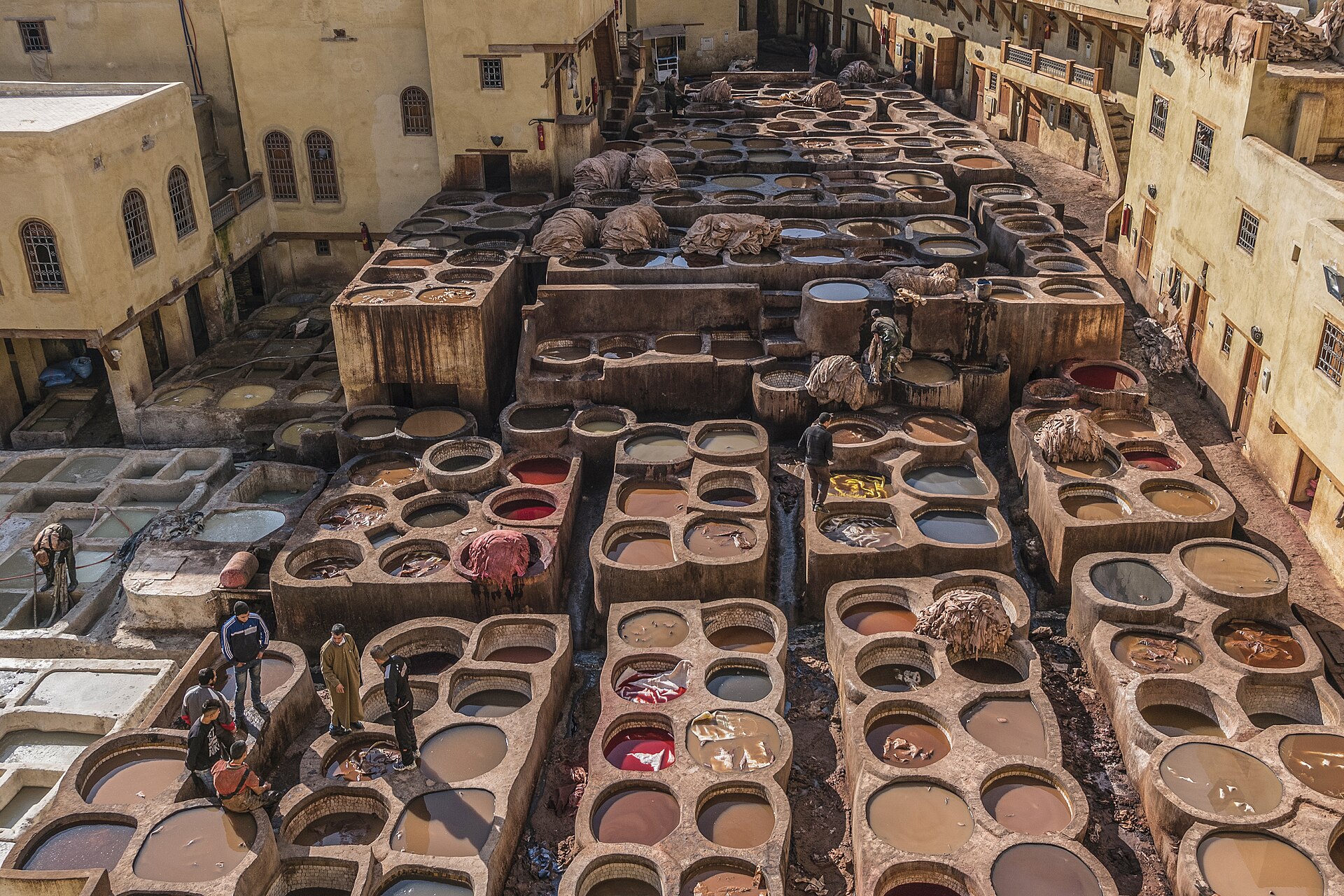
None is automatically bad. The honest label matters. A tannery viewpoint can be fascinating, but it does not teach leather stitching. A pottery-painting session can be joyful, but it is not the same as preparing clay and firing a vessel.
What a short workshop can achieve
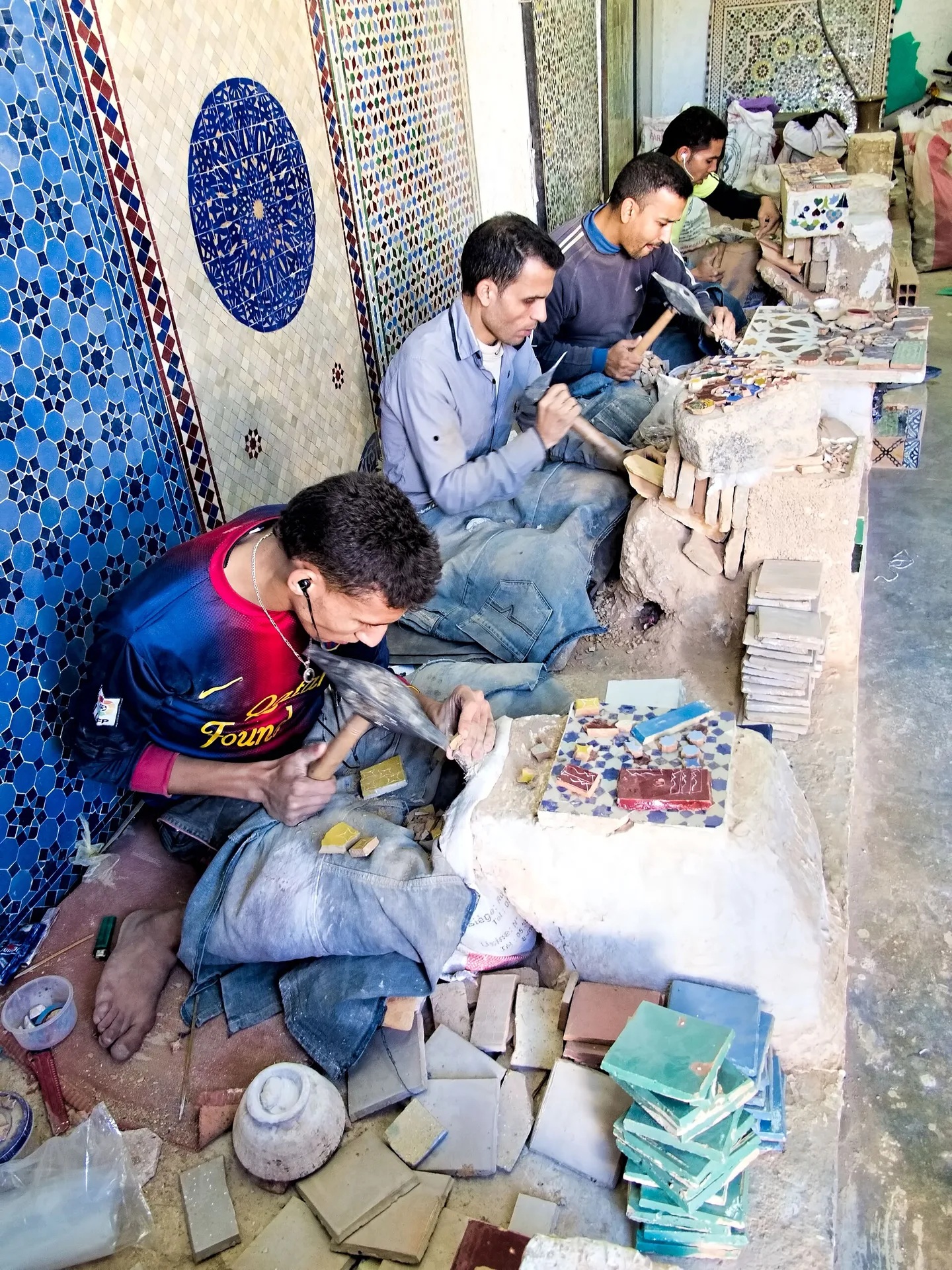
In two or three hours, a beginner might assemble a small zellige mosaic, hand-build a clay object, stamp a leather cover, weave a sample, engrave a brass motif or practise calligraphic letterforms. The material may be prepared in advance, and finishing may happen later.
Ask what you will complete, what the teacher completes and whether firing, drying, backing or shipping is needed. The take-home object is useful; the corrected method is the real souvenir.
Follow the material
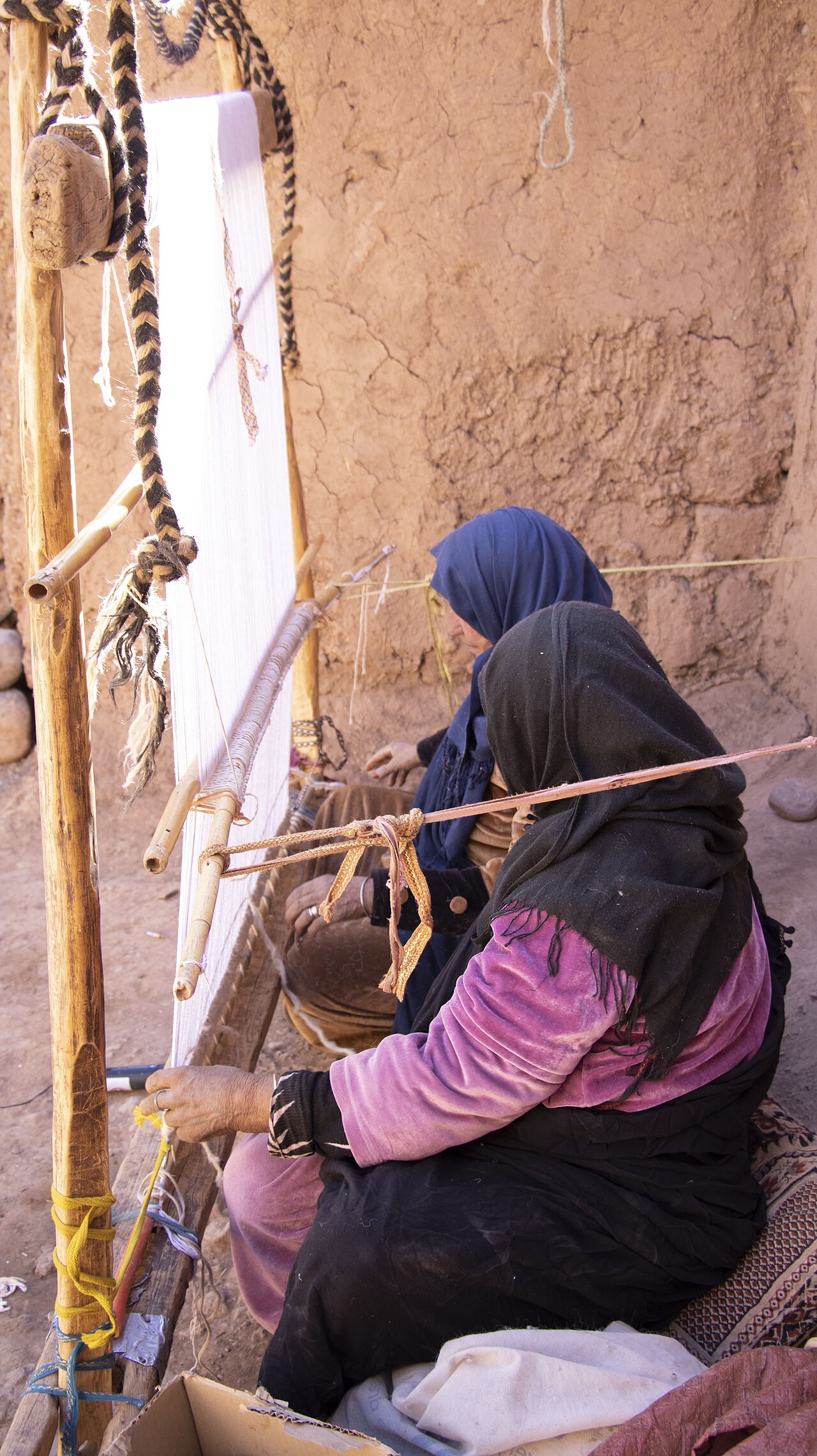
The most interesting workshops explain where materials come from and what happened before the learner arrived. The zellige guide follows clay through firing, glazing, cutting and assembly. The leather guide separates tanning from bench craft. The carpet-weaving guide connects fibre and dye to loom work.
For the south-west, the argan guide explains why producer identity, landscape and women’s work matter more than a retail demonstration.
Artisan benefit and consent
Ask who teaches and how the practitioner benefits. An organiser may be useful for translation, transport and booking, but the maker should not become anonymous. Photography also needs consent—especially in working spaces and cooperatives.
Buying should be optional. A workshop fee and a retail purchase are different transactions. Clear providers explain both without pressure or invented stories about universal motif meanings.
Safety and access
Craft can involve sharp tile, knives, punches, hammers, dust, glaze, dyes, heat and kilns. Ask about age limits, supervision, protective equipment, ventilation and which tools beginners use.
Traditional workshops may have stairs, low benches and narrow medina routes. Confirm the actual work area, seating, toilet access and nearest vehicle point. “Accessible entrance” does not describe the whole learning experience.
Questions worth sending
- Who teaches, and what is their craft background?
- Which stage will I practise?
- What is prepared before I arrive?
- How many learners share the teacher and tools?
- What will I make, and when can I take it?
- Are firing, finishing or shipping included?
- How is the practitioner paid and credited?
- Is buying optional?
- What safety, age and access conditions apply?
- Is the complete activity and venue alcohol-free?
Build a craft route
Use the Morocco hub to connect cities and skills. Fes works well for a deep material route; Tetouan for northern cultural craft; Marrakech for comparing short formats; Essaouira for craft beside music and coastal learning. Choose one workshop for depth, then add interpretation around it.
Enquire with the useful details
Tell GoLearnTo your dates, base, skill interest, experience level, group size, ages, access needs and the object or stage you hope to try. We can then check the teacher, tools, finishing plan and current contact instead of sending you to another showroom with excellent tea.
Evidence
Selected references
Official and institutional references used for place, heritage or practical context. Commercial operators and marketplaces are kept in our private research ledger rather than promoted here. Reviewed 14 August 2026.
- Moroccan National Tourist Office
- Moroccan Ministry of Tourism
 Editorial contextLearn in Fes, Morocco