“Pottery workshop” in Fes can mean throwing clay, hand-building, painting a prepared object, watching a kiln process or assembling zellige. These are related traditions, but they are not interchangeable lessons.
Choose the process before the object
| Format |
Main learner task |
Time constraint |
| Wheel or hand-building |
Form wet clay |
Drying and firing happen later |
| Ceramic painting |
Apply a planned surface design |
Object may already be formed |
| Zellige introduction |
Plan geometry and assemble pieces |
Cutting may be restricted for safety |
| Studio tour |
Observe production stages |
Little or no making |
Ask which steps happen before you arrive. Painting a purchased blank is a legitimate creative session when described honestly; it is not the same as making pottery from clay.
What can a beginner realistically learn?
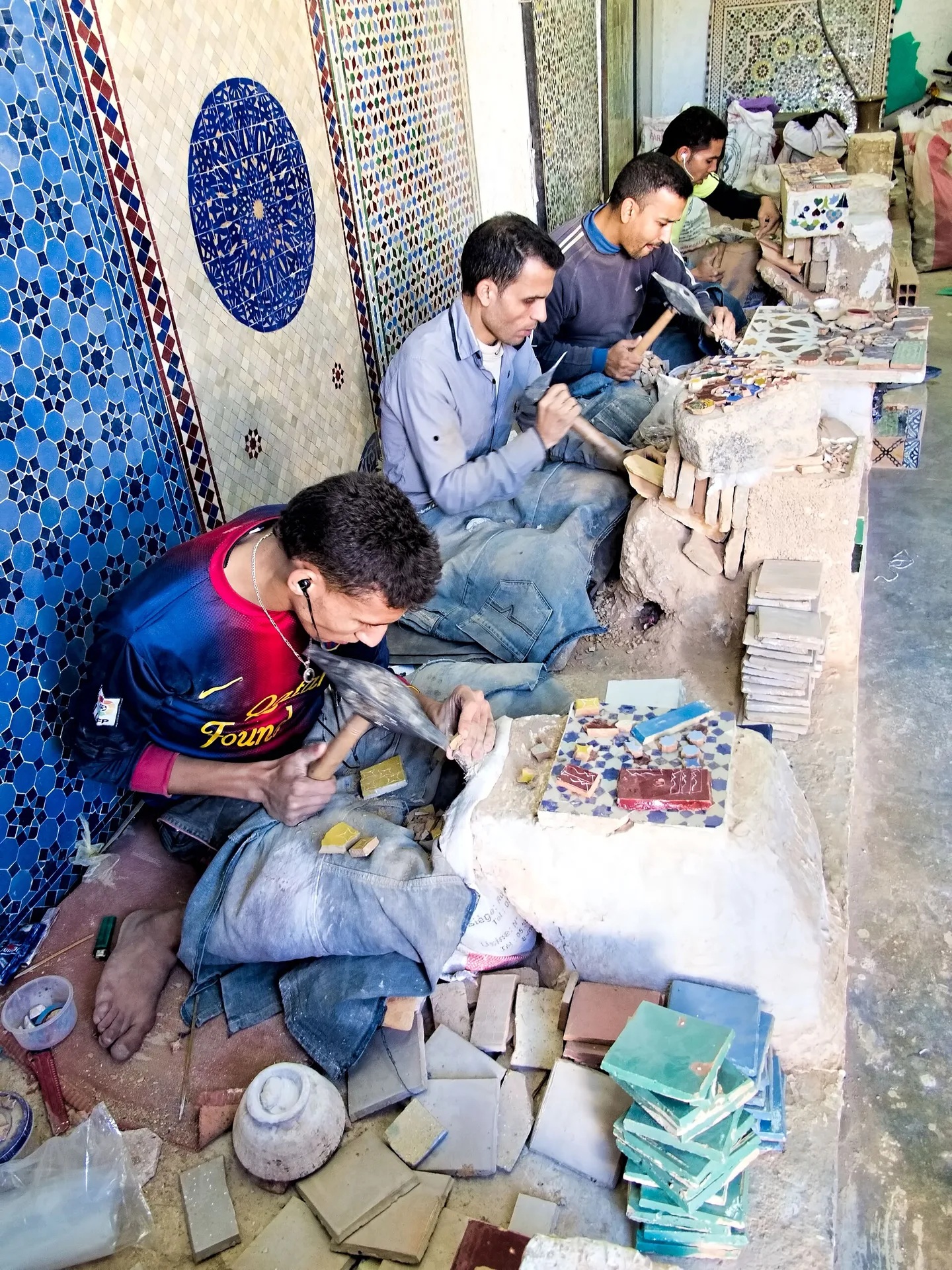
A short clay session can teach centring or basic hand-building, wall thickness and one finishing action. A painting class can teach pattern planning, brush control and how pigment changes through firing. A zellige introduction can explain geometric layout, material variation and assembly while keeping hazardous cutting stages with trained artisans.
Mastery is not a realistic promise. Even a successful first object may depend heavily on teacher rescue, kiln work and finishing after the learner leaves.
Firing, collection and shipping
Clay work often cannot travel home on the same day. Confirm drying time, firing schedule, glazing, collection and responsibility for breakage. International shipping needs protective packing and a clear cost rather than a casual promise.
If the advertised takeaway is immediate, ask whether it is an unfired piece, a painted pre-fired object or a small zellige assembly.
Current evidence
Fes Pottery Art currently advertises pottery, pottery painting and zellige formats from short sessions to longer workshops. Its public material supports the skill taxonomy but does not yet identify enough about the teacher, learner share, firing workflow or safety controls for a verified label.
Questions before enquiring
- Is the session pottery shaping, painting, zellige or a combination?
- Who teaches and how many learners share the instructor?
- Which steps will the learner personally complete?
- Are glazes and materials identified and safely handled?
- What dust, sharp-tool and protective-equipment controls apply?
- When and how is the work fired, collected or shipped?
- Is the venue accessible and insured?
- Is the entire session explicitly alcohol-free?
Return to craft workshops in Fes, learn what kiln firing changes, or explore the zellige guide.
Evidence
Selected references
Official and institutional references used for place, heritage or practical context. Commercial operators and marketplaces are kept in our private research ledger rather than promoted here. Reviewed 14 August 2026.
- Moroccan National Tourist Office
- UNESCO World Heritage Centre

 Learn in Fes, Morocco