Moroccan cooking is not one menu repeated from Tangier to the Sahara. It changes with the city, season, household, market and teacher. The best cooking holiday gives you more than a delicious lunch: it shows you how to choose, prepare, balance and adapt the food when you are back in your own kitchen.
Come hungry, yes. Come curious as well.
Choose your Morocco cooking base
| Base |
Best for |
A useful learning angle |
| Marrakech |
Broad class choice, souk ingredients and short market-to-kitchen formats |
Spice balance, tagine method and comparing tourist-friendly formats |
| Fes |
Fassi food traditions and deep medina context |
Pastilla, bread, tagine and the relationship between market and household cooking |
| Essaouira |
Atlantic ingredients and a calmer coastal rhythm |
Fish, market selection and regional home cooking |
| Agadir and Taghazout |
Souss produce, argan context and rural connections |
Amlou, culinary argan oil and farm-to-table interpretation |
| Tetouan and Tangier |
Northern and Andalusian-Moroccan food context |
Regional dishes, market vocabulary and family-kitchen methods |
| Atlas and south |
Village, mountain and desert food systems |
Bread, preserved ingredients, water and fuel-aware cooking |
Short class or full cooking holiday?
A half-day class can teach one menu and a few techniques. A multi-day cooking holiday gives you repetition, market comparison and time to understand regional variation.
Choose a short class when you have three to five hours and want one practical method. Choose a cooking break when food is a central reason for the trip and you want more than one teacher, menu or setting. A week is useful only if the timetable contains real cooking—not six dinners and one demonstration hiding under a chef’s hat.
Ask for the active teaching hours. Transfers, meals and market walking may be enjoyable, but they are not all tuition.
What a good Moroccan cooking class teaches
A strong session gives you responsibility for meaningful stages:
- identify or choose the ingredients;
- prepare vegetables, herbs, spices and the main component;
- understand why the ingredients are layered or added in a certain order;
- manage heat, moisture and timing;
- taste and correct the seasoning;
- record a method you can repeat;
- share the meal and ask what changes in another home or season.
If a slow stage is prepared earlier, the host should say so and show the difference between batches. Prepared dough or pre-cooked filling can be a sensible teaching tool. Pretending you made everything from scratch is less useful.
Tagine is a method, not only a recipe
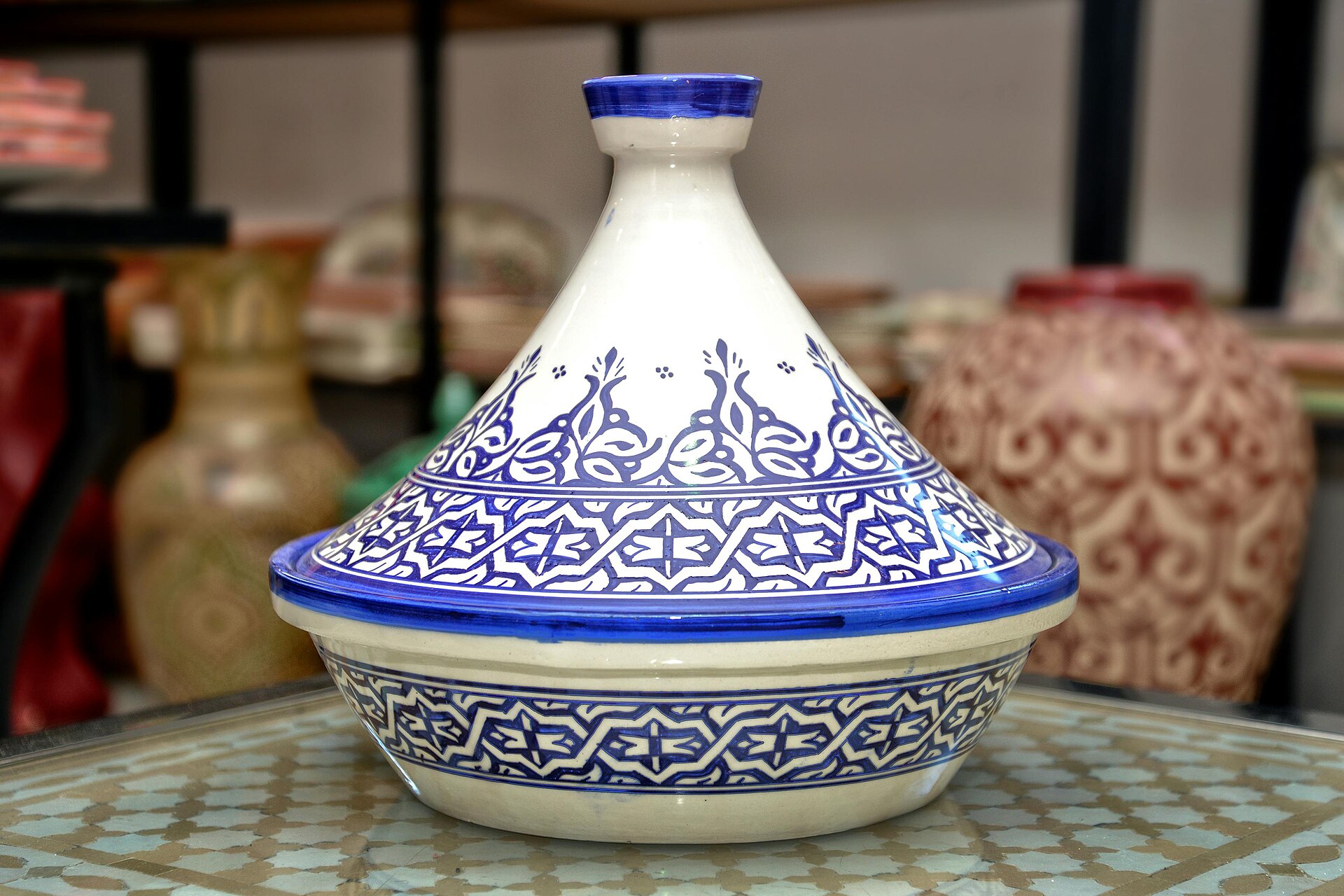
“Tagine” can mean the clay vessel, the dish or the cooking method. A valuable class explains gentle heat, ingredient order, moisture and how the conical lid affects cooking. It also tells you what to do if you do not own a tagine at home.
Read the tagine technique guide before you choose. It includes cookware safety, stovetop substitutions and the questions that separate a repeatable lesson from a demonstration.
Couscous, bread and preserved ingredients
Couscous is more than pouring hot water over grains. Traditional preparation may include moistening, rolling, steaming and fluffing in stages. A short class should say whether you will practise the grain preparation or mainly cook the accompanying vegetables and broth.
Bread opens another part of Moroccan food culture. In some medinas, households prepare dough and send loaves to a neighbourhood ferran, or communal oven. The communal-oven guide explains why an oven visit is not automatically a baking class—and how a respectful bread lesson can include both.
Preserved lemon, olives, smen, harissa-style pastes and spice mixtures vary by household. Ask whether you will make them, use prepared versions or simply taste them. Longer courses have more room for preservation techniques because time is part of the method.
Ras el hanout varies by merchant and purpose. A good lesson lets you smell individual spices, understand their roles and record a blend. A packet of mystery powder with a dramatic story is not a curriculum.
Use the ras el hanout guide to compare sensory blending, spice-shop interpretation and cooking use. The aim is not to find Morocco’s one “authentic” recipe; it is to understand balance well enough to make an informed blend.
When a market visit earns its place
A market visit improves the class when the teacher shows how to choose ingredients, compare quality, understand seasonality and use local vocabulary. It adds less when the group follows a guide through a crowded souk, photographs vegetables and returns to a kitchen where everything is already chopped.
Ask whether you will make purchasing decisions, which stalls are visited and how much time remains for cooking. Markets are working places. Photography, tasting and group movement should respect traders and other shoppers.
Regional choices in plain English
Marrakech is the easiest city for comparing many short class formats. Verify the teacher, group size and how much hands-on time survives the market visit.
Fes suits travellers who want food alongside Arabic, craft and medina history. Fassi cuisine deserves slower explanation; the city is a strong base for a two- or three-day learning plan.
Essaouira connects cooking with Atlantic markets and a gentler urban pace. Ask what happens when the preferred fish is unavailable and whether the menu changes with the catch.
Agadir and Taghazout make sense for Souss ingredients and argan learning. The argan guide helps distinguish culinary from cosmetic oil and a producer lesson from a retail stop.
Tetouan and Tangier add northern, Mediterranean and Andalusian-Moroccan context. A useful class should name the dish’s local connection instead of using “Moroccan menu” as a catch-all.
Dietary needs and the Amanah boundary
Moroccan cooking naturally supports many alcohol-free menus, but GoLearnTo still checks the whole experience. The ingredients, cooking process, venue, drinks and promoted inclusions must all be alcohol-free.
Tell the host about allergies and dietary needs before the market visit. Ask about stock, butter, preserved ingredients, nuts, sesame and cross-contact. “Vegetarian” does not automatically mean vegan; “gluten-free dish” does not prove a gluten-free kitchen.
If you need strict controls, request the exact menu, ingredient list, workspace and substitution plan. Warm hospitality is wonderful. It is not an allergen protocol.
How to compare providers
Before enquiring, ask:
- Who teaches, and will that person be present on my date?
- What will I prepare with my own hands?
- How many learners share one workstation?
- How long is active cooking time?
- Is the market visit instructional or mainly sightseeing?
- Which stages are prepared in advance?
- Will I receive written recipes or ratios?
- Can the method be repeated with ordinary home equipment?
- How are allergies, hygiene, knives, heat and children handled?
- Is the full venue and experience alcohol-free?
- What is included in the current price?
Make it a learning holiday
Pair cooking with Arabic or Darija to understand market and kitchen phrases. In Fes, combine it with zellige or leather craft. Around Essaouira, add Gnawa learning. Near Agadir, connect the meal to the argan landscape.
The Morocco hub helps you choose the city by its strongest skills. The broader cooking-holidays guide helps you compare class depth, menus and take-home outcomes across countries.
Enquire with the useful details
Tell GoLearnTo your dates, preferred city, cooking level, group size, dietary needs and the dishes or techniques you want to learn. Say whether you want a market visit, family-style kitchen, professional school or multi-day programme. We will check the teacher, real cooking time, current price and alcohol-free scope before suggesting a next step.
Evidence
Selected references
Official and institutional references used for place, heritage or practical context. Commercial operators and marketplaces are kept in our private research ledger rather than promoted here. Reviewed 14 August 2026.
- Moroccan National Tourist Office
- UNESCO

 Editorial contextLearn in Essaouira, Morocco